

Morpho Markets
A Morpho lending market is an isolated pool where lenders supply assets and borrowers take loans against collateral. Each market is defined by five parameters: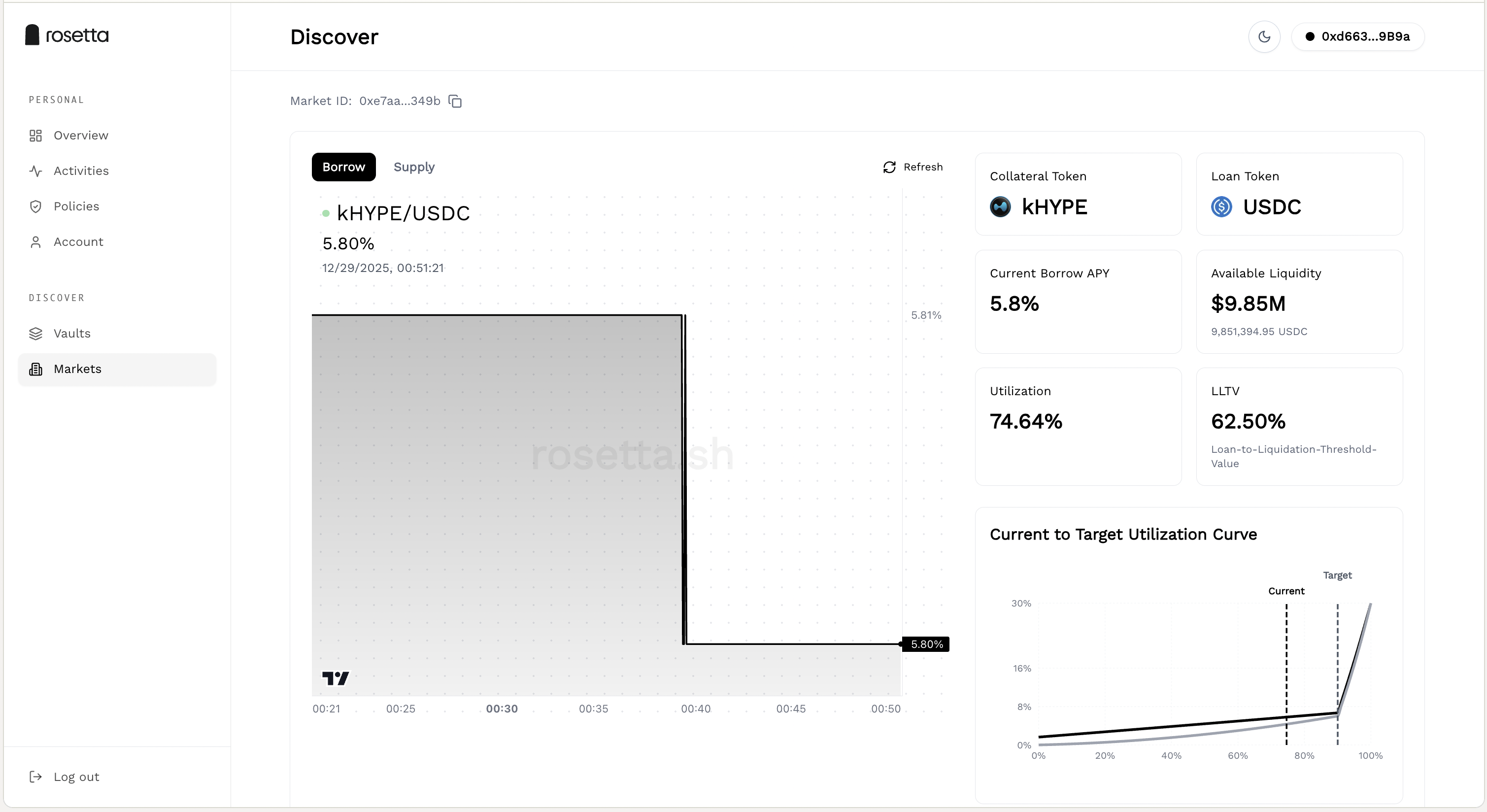
Utilization = Total Borrowed / Total Supplied
Supply APY = Borrow APY × Utilization × (1 − Fee)
Utilization drives rates. Higher utilization means higher rates. Lower utilization means lower rates.
Liquidity
Available liquidity = Total Supplied - Total Borrowed
This is what can actually be borrowed at any moment. When utilization is high, available liquidity is low.
Price Per Share (PPS)
Lenders receive shares representing their claim on the pool. As interest accrues, total assets grow while shares stay constant. The ratio (assets/shares) increases over time. This is how yield is realized without explicit payments.
Isolation
Markets are isolated. A WHYPE/USDC market and a kHYPE/USDC market share nothing: different collateral, different risk parameters, different utilization. Bad debt in one market does not affect others.
Morpho markets are available on both HyperEVM and Base.
Aave Markets
Aave uses a pooled lending model where multiple assets share a single lending pool. Unlike Morpho’s isolated markets, Aave pools aggregate supply and demand across assets.
How Aave Differs from Morpho
The Yield Router evaluates Aave supply APY alongside Morpho vault APY when making allocation decisions.