

Structure
Each vault has: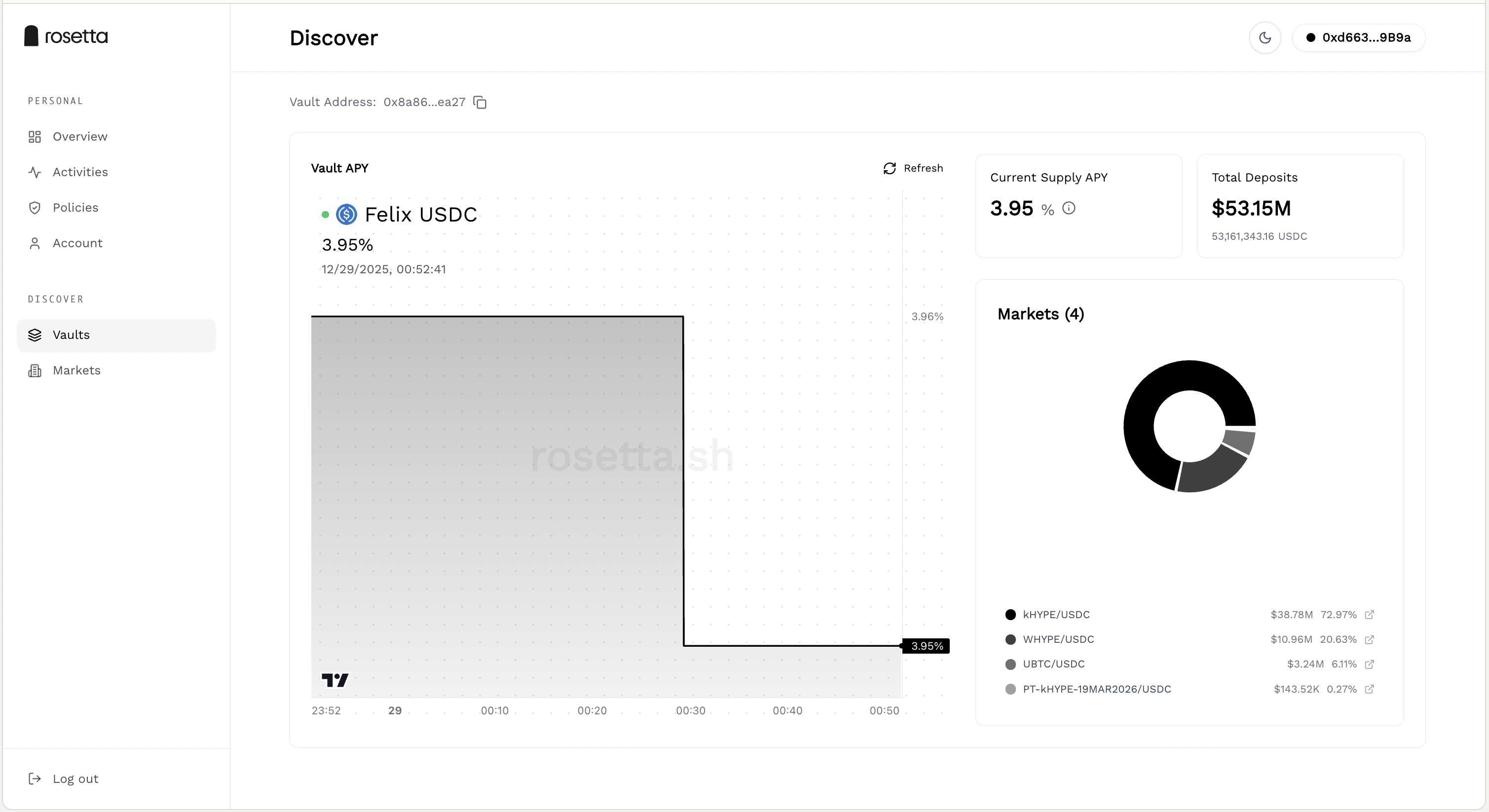
Shares and Assets
When you deposit into a vault, you receive vault shares representing your proportional claim on the vault’s total assets. Shares: Tokens minted by the vault when you deposit. They represent ownership, not a fixed amount. Assets: The total value the vault holds across all its market positions, denominated in the underlying asset (e.g., USDC). The vault does not pay interest directly. Instead, as underlying markets accrue interest, total assets grow while total shares remain constant. This increases the Price Per Share (PPS):PPS = Total Assets / Total Shares
Your shares stay the same. Their redeemable value increases.
Curators
Curators are responsible for:- Selecting which markets the vault allocates to
- Setting allocation weights and caps
- Monitoring risk parameters (LLTV, collateral quality, utilization)
- Rebalancing between markets