

Introduction
What is Rosetta
Rosetta is yield infrastructure for DeFi, built to make on-chain yield transparent and actionable across chains and protocols. It currently operates on HyperEVM and Base, routing capital across Morpho and Aave markets and vaults. It supports USDT0 and USDC as routable assets. Rosetta consists of two core components: Indexer: A block-level data infrastructure that tracks lending markets, vaults, and yields continuously across supported chains. Computes state every block for accurate APY reporting, utilization tracking, and liquidity monitoring. Yield Router: A non-custodial allocation system that routes capital across vaults and lending markets based on real-time yield data, user-defined policies, and cost-aware execution logic. The Indexer provides the data layer. The Yield Router consumes that data to make allocation decisions and execute them through user-controlled smart accounts. Together, they form infrastructure that applications (including the Router itself) are built on.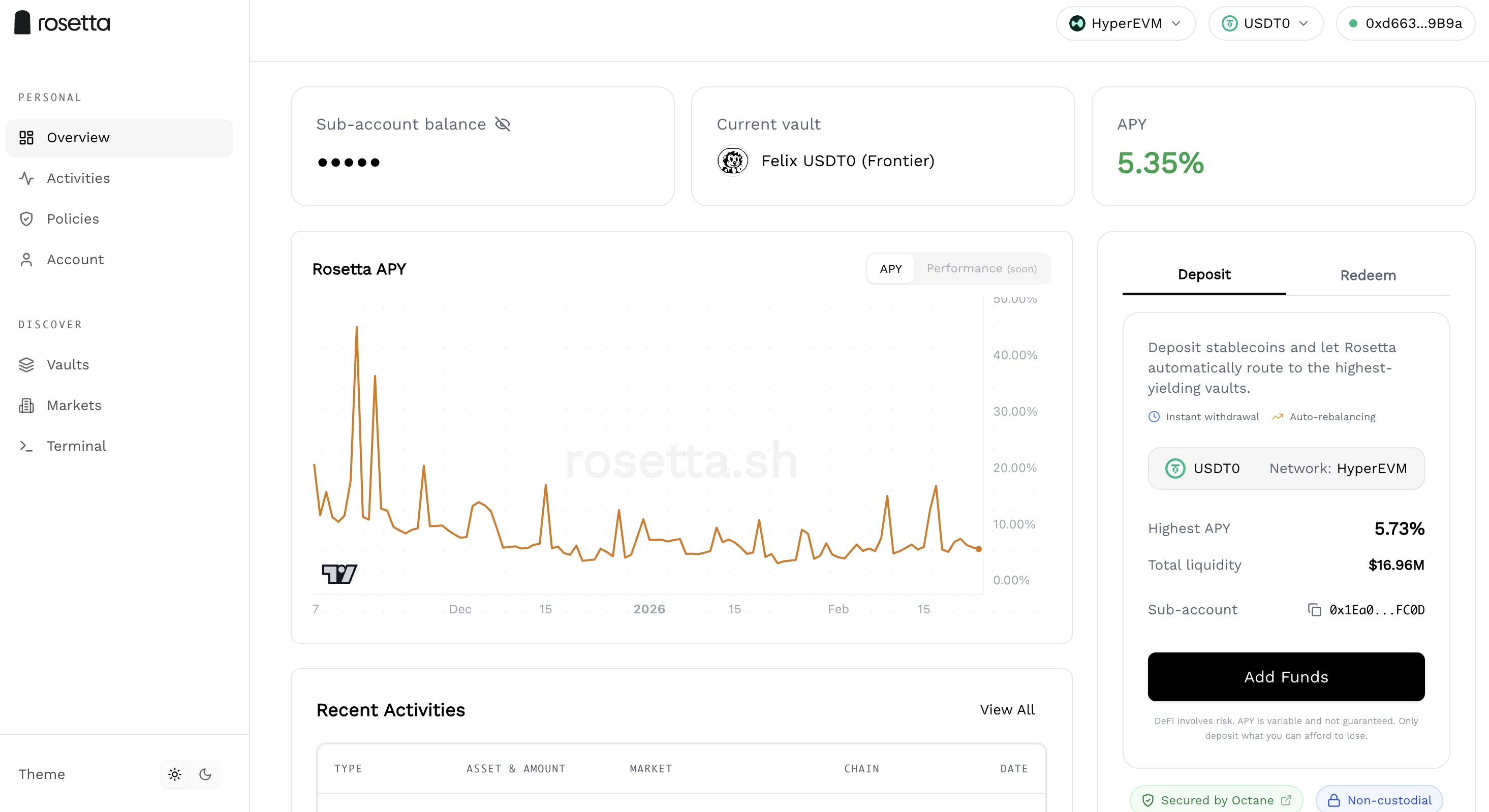
Supported Chains and Protocols
| Chain | Protocols | Assets |
|---|---|---|
| HyperEVM | Morpho, Aave | USDT0, USDC |
| Base | Morpho | USDC |